
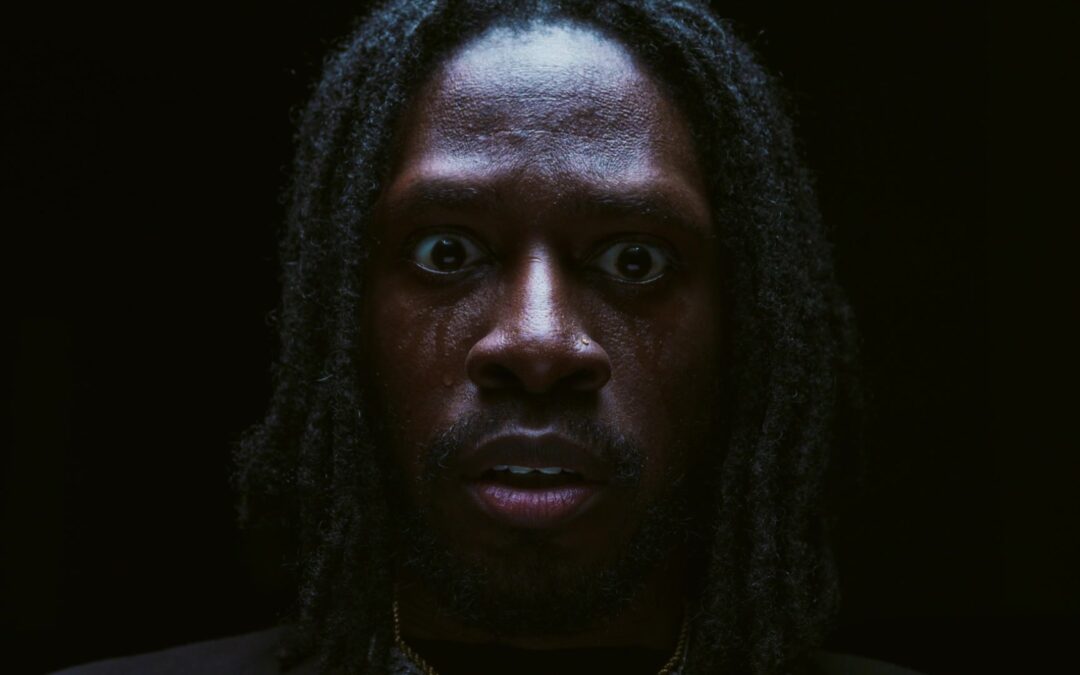

Robb Gat$ / Haunted / Chroma key
Behind the
fall in
Haunted.
By Jan-Michael Reyes
In Robb Gat$’s “Haunted,” hypnosis pulls the character out of the room and into a dark void. The finished sequence shows why a convincing green screen shot begins long before the green disappears.
01 / LIGHTING
Light for the world
you are building.
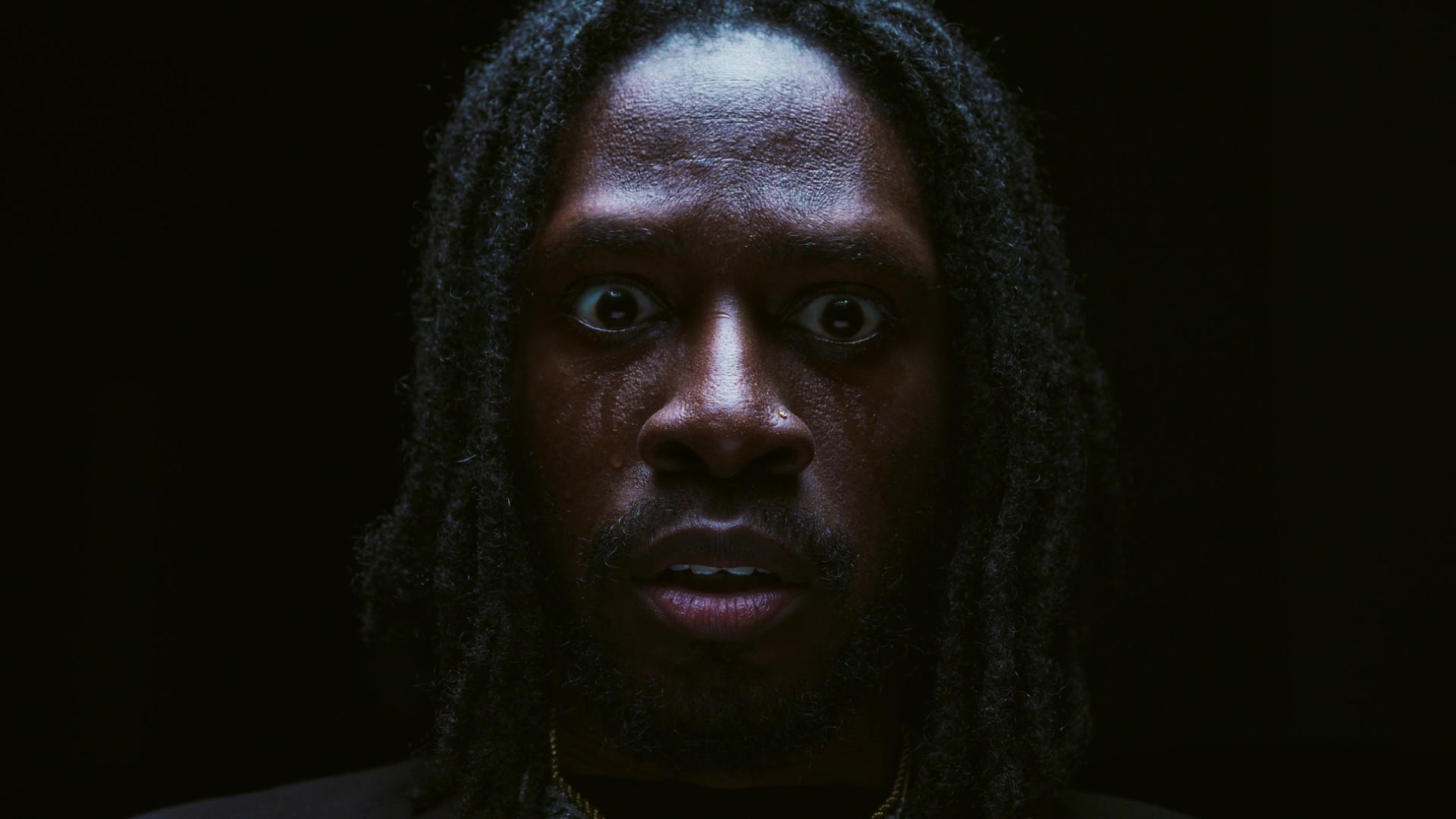
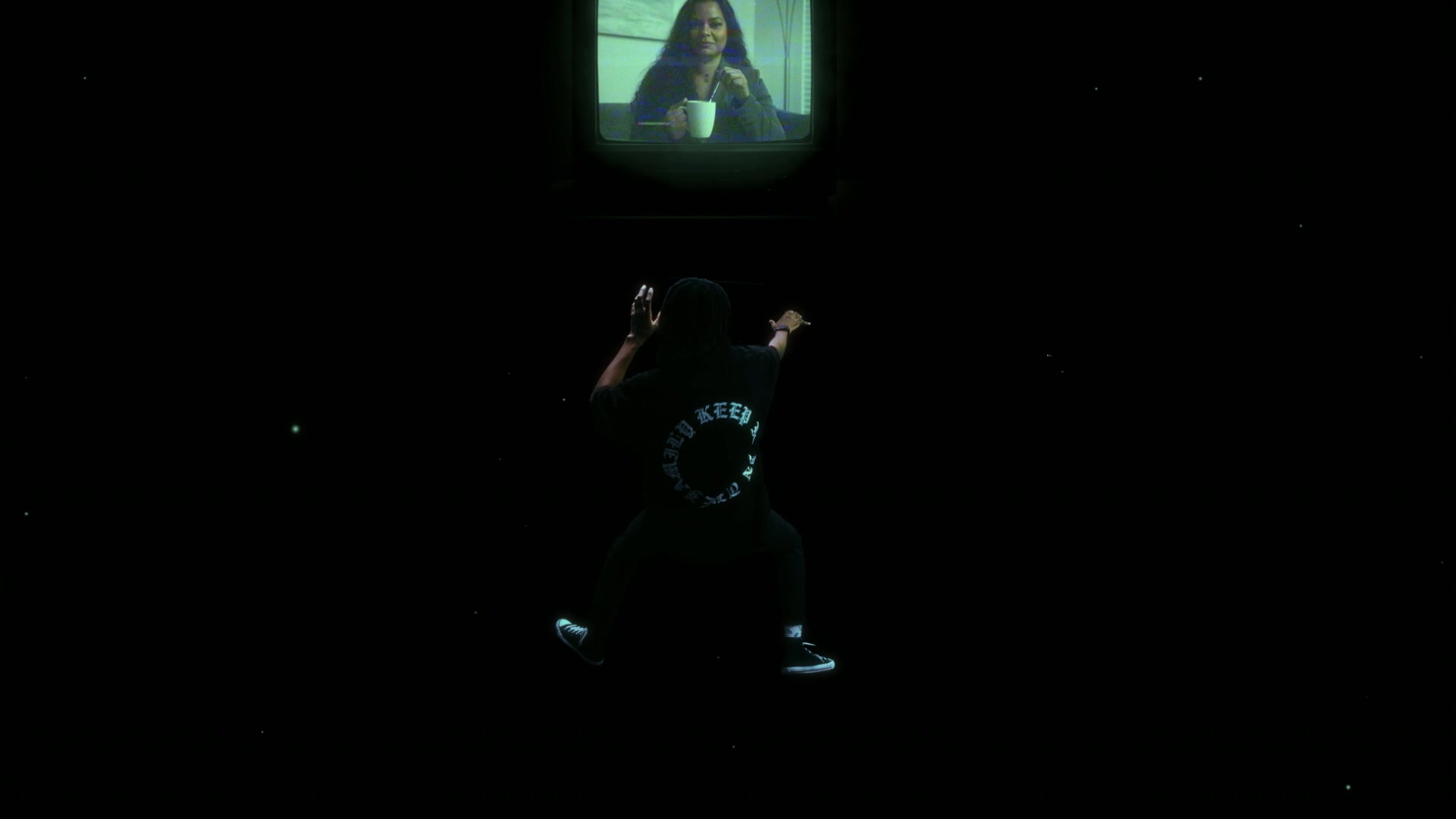
The finished scene is deliberately dark. Small highlights reveal the face, hands, and shoes while much of the clothing falls into shadow. This gives the character enough definition to read without making the void feel brightly lit.
For chroma key work, the backdrop and performer have different lighting needs. The screen benefits from even illumination; the subject needs direction, softness, and contrast appropriate to the final environment. Bright patches, folds, and shadows on the backdrop widen the range of colors the key must remove.
Keep green reflections off skin and clothing where possible. Subject-to-screen distance and controlled lighting help. Expose for usable detail without clipping the backdrop or burying edges in noise. These are planning principles, not a claim about the exact fixtures or exposure settings used on this shoot.
02 / CAMERA & PERFORMANCE
Choose the angle
before the composite.
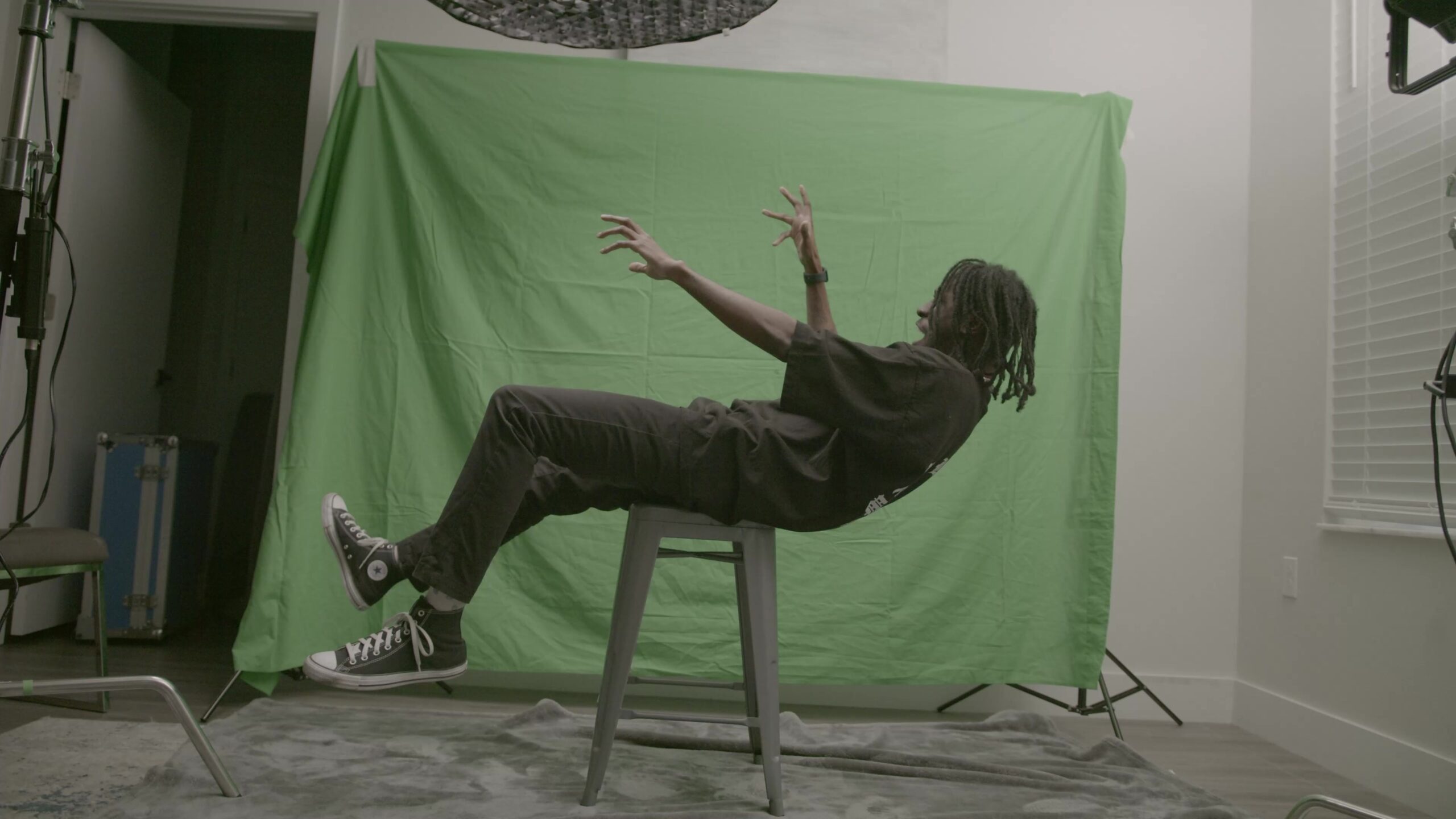
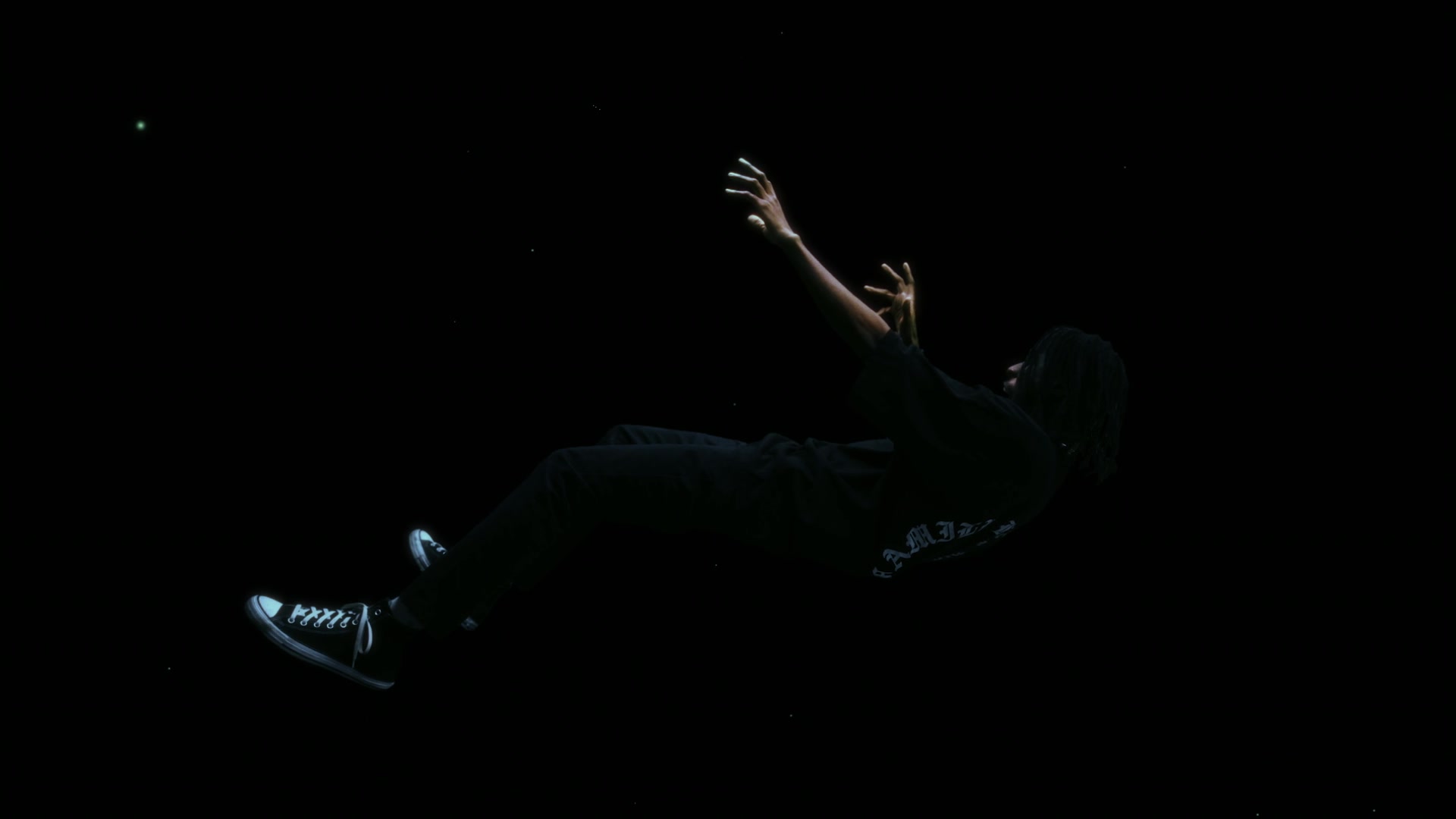
The side view reveals the backward lean and the shape of the legs. The rear view establishes the character facing the distant screen. Each angle supplies different visual information for the sequence.
Match the camera height and perspective to the intended shot. Scaling or rotating a flat layer cannot reveal a surface the camera never saw. Lens perspective, framing, and the direction of the performer’s gaze should be planned together.
Leave room for hands, feet, and hair throughout the action. A limb moving beyond the backdrop creates extra masking work; a limb leaving the recorded frame cannot be recovered simply by keying.
The illusion needs the whole frame.
03 / KEYING & MASKING
Separate the subject.
Protect the details.
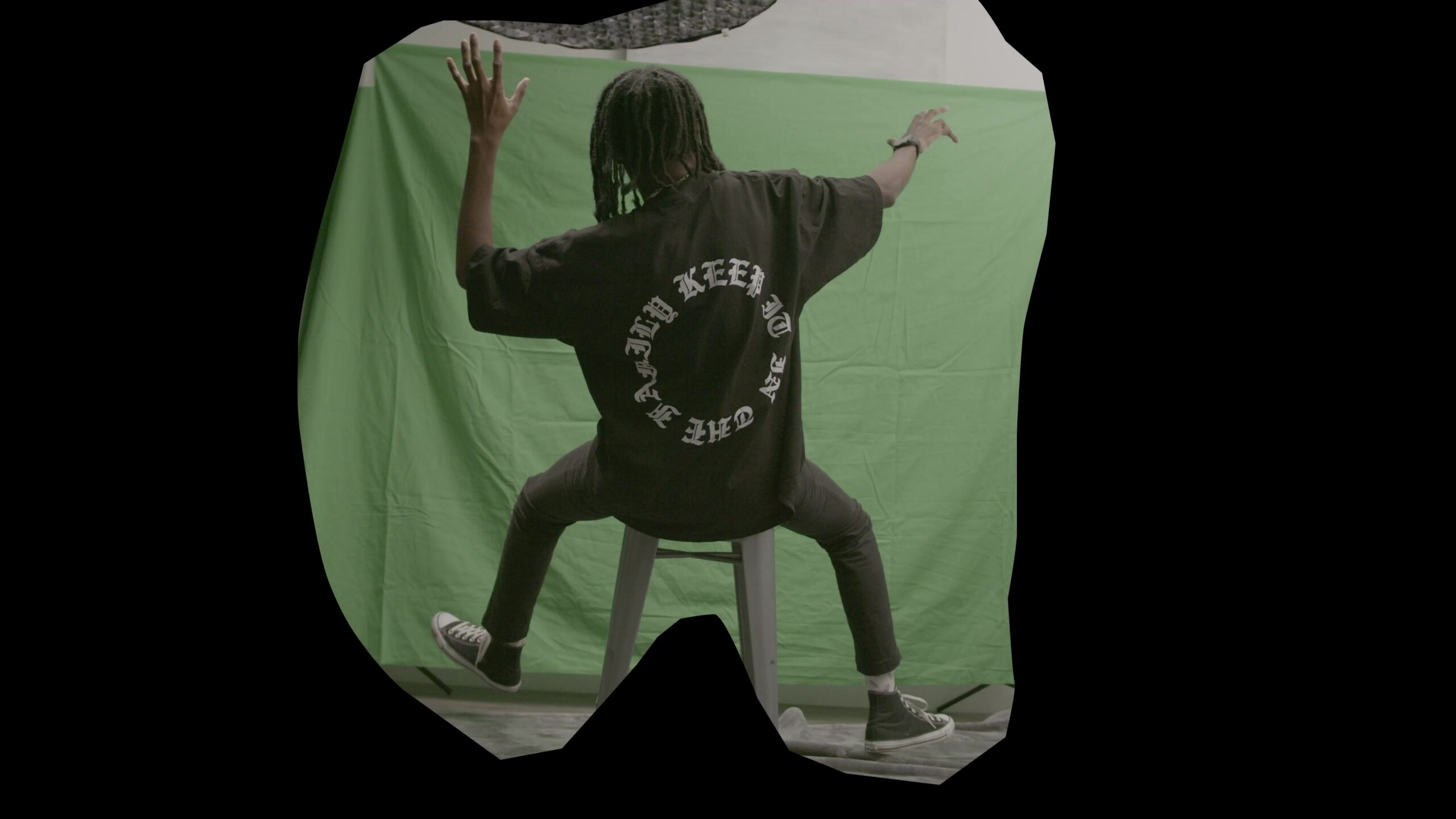
Begin with a garbage matte to exclude the surrounding room and equipment. Keep it loose enough to accommodate the entire performance. Then pull the chroma key and inspect its alpha matte: the subject should retain opacity while the unwanted background becomes transparent.
Work carefully around hair, fingers, shoelaces, and blurred movement. Aggressive clipping can erase fine detail or leave brittle edges. Test against both light and dark temporary backgrounds rather than judging only against black.
The support is not green, so the key does not automatically remove it. Separate masks or rotoscoping address its silhouette. Where a support hides part of the body, removing it can expose a missing area that needs reconstruction.
In an After Effects workflow, Keylight, Key Cleaner, and Advanced Spill Suppressor handle different parts of separation and edge cleanup. Use them according to the footage, not as a fixed set of settings. Spill correction should remove contamination without flattening legitimate color.
04 / MOTION & PHYSICS
Make every movement
tell the same story.
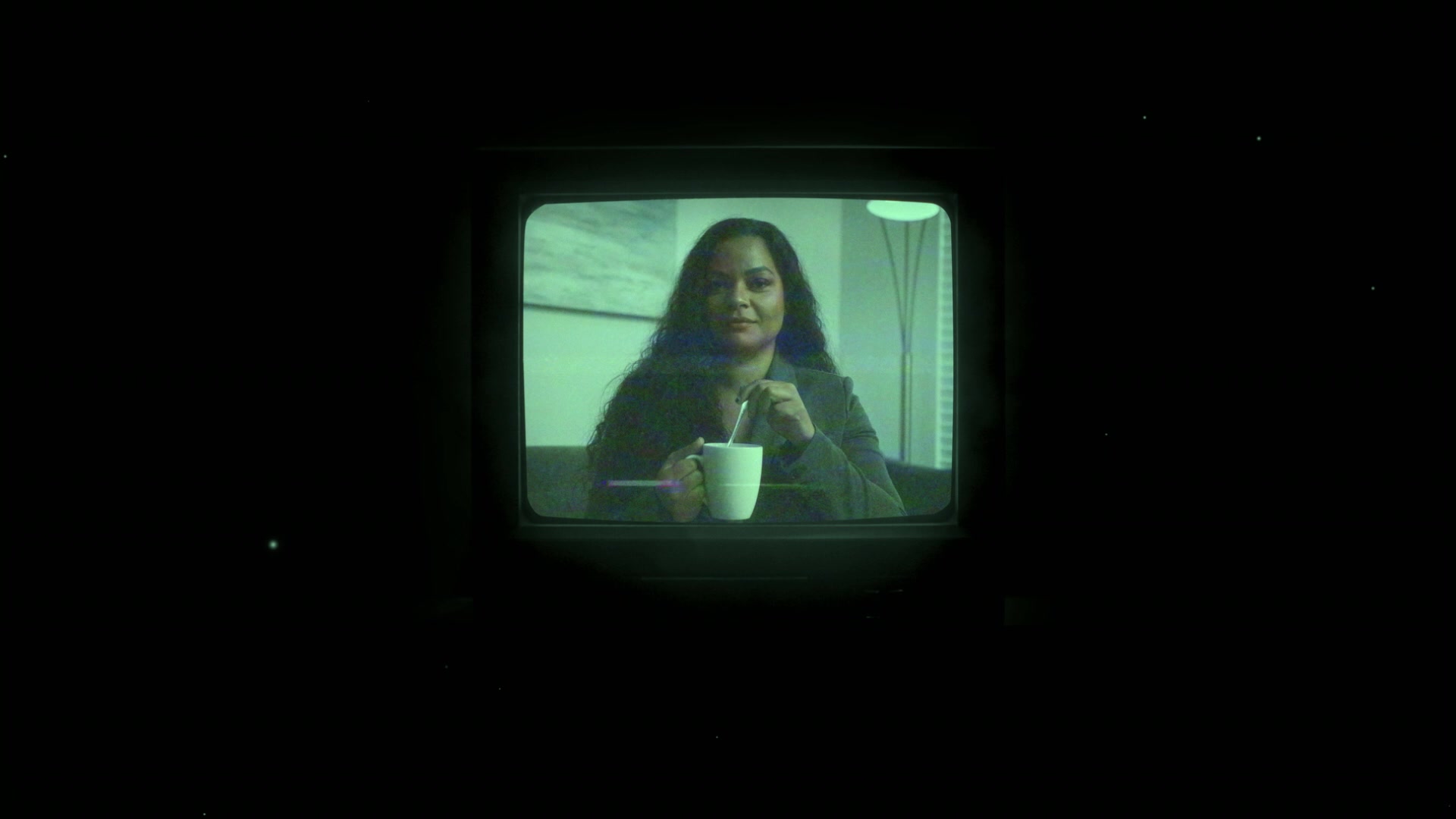
The distant screen provides a reference point in an otherwise empty environment. The relationship between that screen and the character helps the viewer interpret separation, distance, and direction.
Coordinate subject position, rotation, scale, and background movement. Changes in size imply changes in distance; acceleration and easing influence whether the body feels pulled, dropped, or drifting. Motion blur should agree with that movement and the virtual camera.
A surreal void does not need to behave exactly like outer space. It does need consistent visual rules. Weightless drift differs from a fall through air, where drag affects clothing and hair. Choose the behavior the story needs and keep the cues coherent.
05 / POST-PRODUCTION
Finish it as
one image.
Match exposure, black levels, color, sharpness, grain, and blur after the layers are assembled. Environmental light can help integrate a subject, but a uniform glow around every edge usually calls attention to the cutout.
Review at playback speed as well as frame by frame. Check for flickering mattes, sliding masks, changes in edge color, and cleanup that fails as the body moves. The final grade should unify the image without hiding problems that need to be fixed earlier.
The finished frames here are direct stills from the supplied official music video. The production frames are separate examples from the supplied clips, not synchronized before-and-after pairs.
Plan the shot.
Build the illusion.
Lighting gives the subject form. Camera angles give it perspective. Masking separates it. Motion and finishing make it belong. In “Haunted,” those decisions work toward the same moment: a character losing his connection to the room.